Striped Sofa: How to Style One So the Whole Room Works
A striped sofa is the hardest-working kind of statement piece: it brings color, pattern and structure in one purchase. Style it well and every other choice gets easier, because the sofa hands you a palette to build on. Style it carelessly and the room turns into an argument between stripes, cushions and curtains. Stripes follow rules, though: get the scale right, borrow your colors from the fabric, and keep everything else quieter than the sofa.
Quick Facts
- Stripe width sets the volume: under 1 inch reads as texture; 4 inches and wider is the room’s main pattern.
- The safest wall color is already in the sofa — use the lighter of its two stripe colors.
- One large-scale pattern per room is enough. If the sofa has it, the rug and curtains go plain.
- Stripes usually run along the length of the seat; check they line up across cushions and seams before you buy.
- Stripes forgive crumbs, lint and pet hair better than a flat light fabric, but arm fronts and seat edges still show wear first.
Start With the Stripe: Scale and Direction
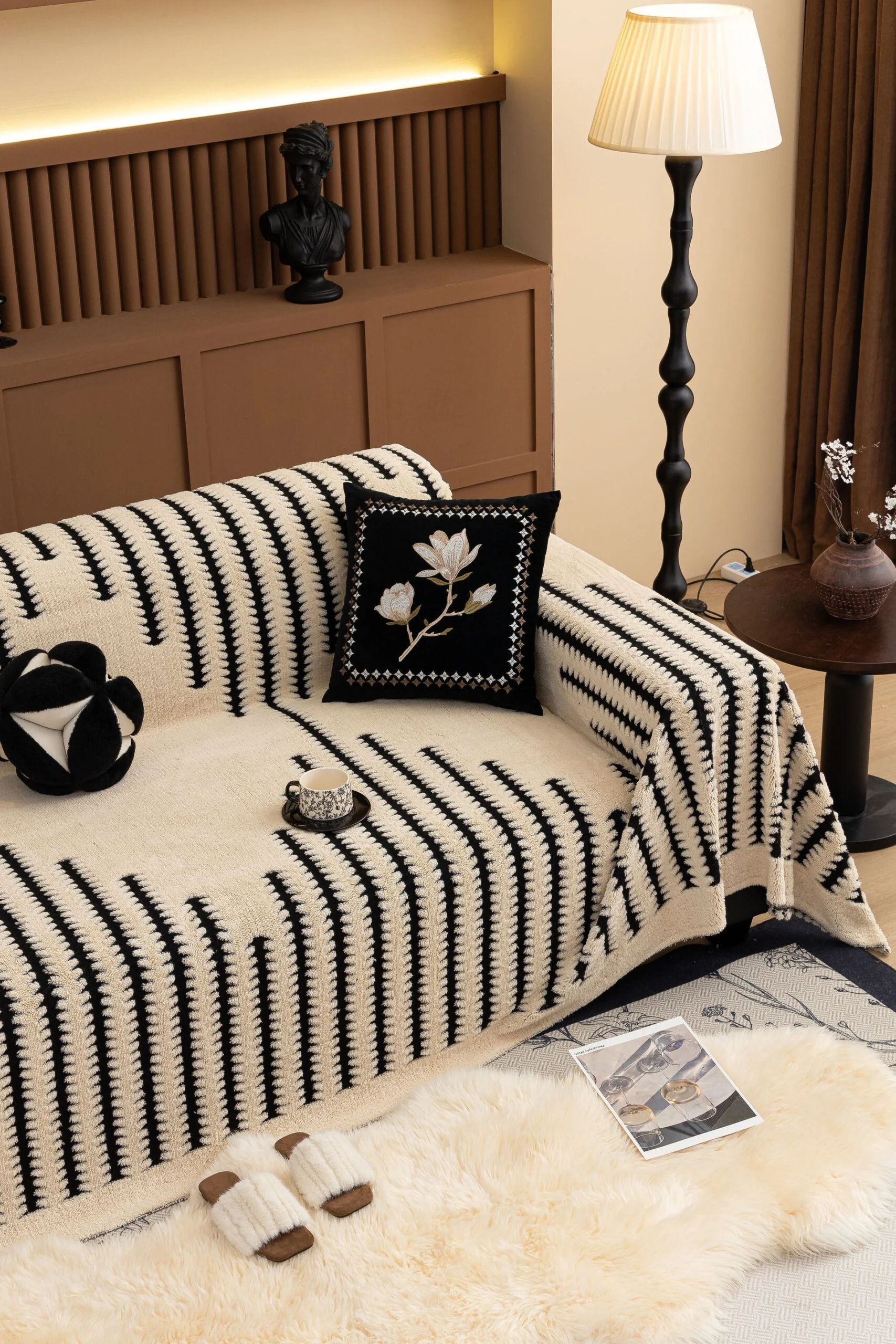
Everything begins with the width of the stripe, because width decides how loud the sofa is. A narrow ticking stripe, the thin blue or gray line on off-white cotton, behaves almost like a solid, even in a small room. Medium stripes, roughly 1 to 4 inches wide, are the classic choice: clearly stripes, but calm. Wide stripes of 4 inches and more, especially in a hard contrast like black and cream, are a commitment: the sofa becomes the picture and the rest of the room becomes the frame.
| Stripe width | How it reads | Best for | Watch out for |
|---|---|---|---|
| Under 1 in (ticking, pinstripe) | Texture more than pattern | Small rooms, pattern mixing | Can look flat gray from a distance if contrast is low |
| 1–4 in (classic stripe) | Clear pattern, still relaxed | Most living rooms | Needs seams matched across cushions to look well made |
| 4 in and wider (bold stripe) | The room’s focal point | Large rooms, plain walls | Fights with patterned rugs, curtains and wallpaper |
Direction matters too. On most sofas the stripes run along the seat and over the arms; stripes running vertically up the back cushions instead add height to a low-backed sofa. On a corner sectional, ask how the stripes turn the corner — on a well-made piece the pattern is planned around the turn, on a cheap one they collide. And check a photo of the exact model, not just a swatch: seat cushions striped in a different direction from the back cushions are a cost-cutting shortcut.
Build the Color Scheme Around the Sofa
A two-color stripe gives you a ready-made palette, so use it. Paint the walls the lighter stripe color, or one shade softer, and the sofa looks deliberate rather than dropped in. Match the whites carefully: a bright blue-white stripe against yellowish cream walls makes the walls look dirty. A true neutral earns its keep here — the warm, gallery-friendly white we break down in our guide sits comfortably behind most stripe combinations.
Add one accent color that is not in the stripe — mustard against navy and white, rust against sage and cream, black against almost anything, and repeat it three times in small things. One accent repeated looks collected; four look like a sale rail. Wood counts too: pale oak cools a warm stripe, dark walnut makes it feel traditional.
Mixing Patterns Without a Fight
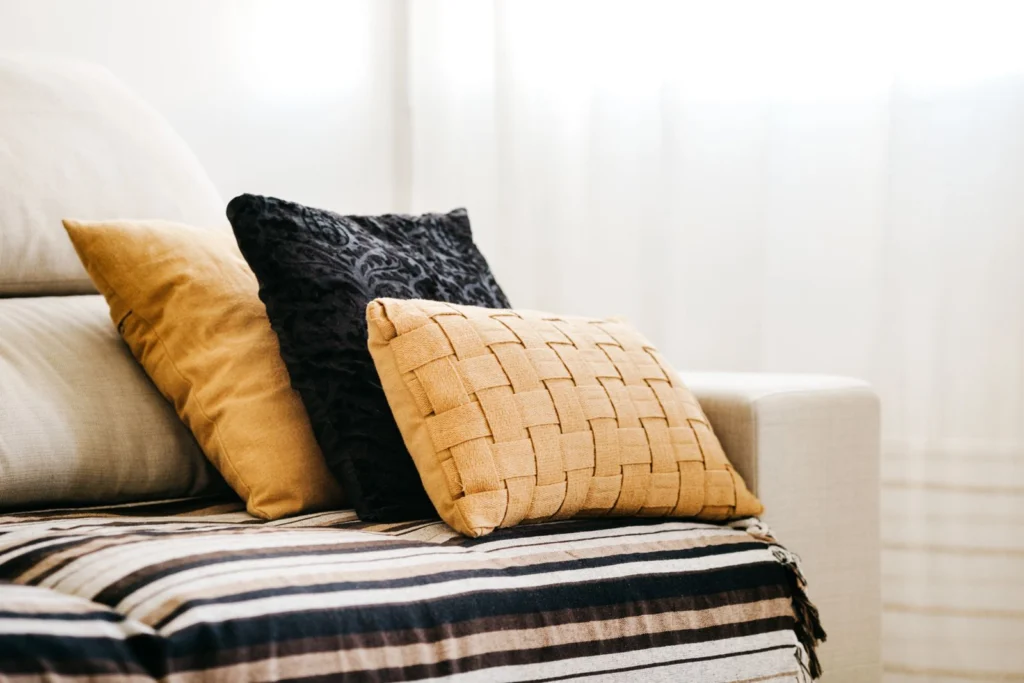
Stripes are the easiest pattern to mix because they are geometric and regular. The working rule is scale separation: one large pattern, one medium, one small, and never two patterns of the same scale side by side. If the sofa carries the large pattern, cushions can carry a medium floral or block print, and a small check or dot can appear in a throw. Keep one color shared across the patterns and the mix reads as a family.
Do not add a second bold stripe. A striped cushion on a striped sofa only works when its stripe is a clearly different width running a different direction, and even then, a solid cushion with real texture usually looks better. Linen, wool, bouclé and leather give visual interest without pattern, and a striped sofa needs that breathing room. Two or three plain cushions in the stripe’s colors, one patterned cushion and a textured throw; that formula survives most sofas.
Rugs and Curtains: Keep Them Quieter
The floor and the windows are where striped sofas most often go wrong. Choose a rug that is solid or patterned so small it reads as texture — jute, a faded vintage-style rug, or plain wool. A bold geometric rug under a striped sofa sets up a fight nobody wins. Size follows the usual rule: front legs on the rug at minimum, usually an 8×10 ft rug for a three-seat sofa, larger for a sectional.
Curtains follow the same logic. Solid linen or cotton in the wall color or the lighter stripe color lets the sofa keep the pattern job; if plain feels unfinished, pick a woven texture rather than a print, and hang them high and wide. Save striped curtains for rooms where the sofa is plain — stripes at the window and stripes on the seat pull the eye in two directions at once.
Small Rooms and Tight Layouts
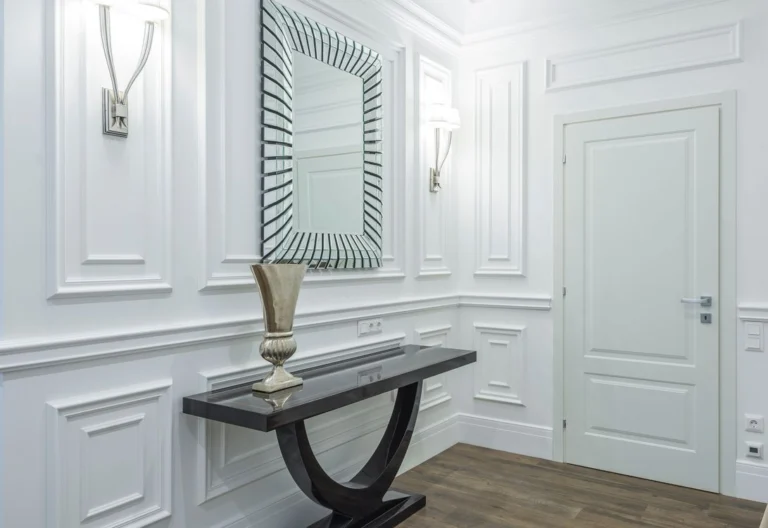
A striped sofa is not off-limits in a small living room; it just has to be the right stripe on the right frame. Choose narrow to medium stripes, arms that do not roll or flare, and visible legs — floor showing beneath a sofa keeps a small room open. Give it slim company: a demilune console table against the wall or behind the sofa provides a surface for lamps and drinks without a sideboard’s footprint, and a round or glass coffee table removes one more set of hard lines competing with the stripes.
Multi-use rooms benefit from clear zones. If the living room also works on weekdays, give the sofa the calm corner and put the work zone across the room, using the same one-zone-per-job layout thinking behind a functional home office. The stripes then mark the relaxing half of the room, and the desk setup stays solid-colored and quiet.
Fabric, Wear and Cleaning
Stripes are practical upholstery, within limits. A two-tone stripe hides daily evidence — crumbs, lint, pale pet hair on the dark stripe, dark hair on the light one — far better than a plain cream sofa. Cotton duck and cotton-linen blends suit slipcovered styles and can be washed — the light stripe will eventually show a gray film along the arm fronts and seat edges. Performance weaves wipe clean more easily and hold a crisp pattern, but can look flat in wide stripes, so judge them from the largest swatch you can get.
Rotate and flip the seat cushions monthly, so one seat does not fade or soften ahead of the others. Vacuum weekly with an upholstery tool, working along the stripe direction. Blot spills at once and test any cleaner on the back of a cushion first. Be honest about sunlight: a striped sofa half in a sunny window fades unevenly, and no cleaning fixes that. Sheer curtains or UV film cost far less than reupholstery.
Mistakes That Make a Striped Sofa Look Wrong
Most striped-sofa rooms fail in predictable ways. The first is matching: striped cushions, curtains and throw bought to “go with” the sofa until the room looks like a fabric shop. The second is a busy wall — bold wallpaper behind a bold sofa leaves the eye nowhere to rest, so patterned walls call for a narrow, low-contrast stripe at most. The third is ignoring light: a high-contrast stripe in a dark, north-facing room looks harsh, where softer colors would feel calm. Fourth, buying from a swatch alone — always see the whole piece at full scale first. And check the view from the doorway — stripe direction, rug edge and curtain lines should not all pull different ways.
Frequently Asked Questions
What colors go with a blue and white striped sofa?
Warm white or pale cream walls, natural wood or jute, and one warm accent — mustard, rust, tan leather or brass — to stop the scheme feeling cold. Red works too — keep it to a cushion or a stack of books, unless you want the full nautical theme.
Can you mix a striped sofa with a patterned rug?
Yes, if the rug’s pattern is much smaller in scale than the sofa’s stripe, or so faded and low-contrast that it reads as texture. A worn-look vintage rug usually passes this test; a bold geometric or another stripe does not.
Do stripes make a small living room look bigger or smaller?
Narrow, low-contrast stripes are close to neutral and will not shrink the room. Wide, high-contrast stripes make the sofa feel bigger and the room fuller. In a small space, pair a finer stripe with visible legs, plain walls and a light wood or glass coffee table.
What curtains go with a striped sofa?
Plain ones: linen or cotton in the wall color or the lighter of the sofa’s two stripe colors, hung high and close to the ceiling. A woven texture is fine; a print usually is not.
Is a striped sofa a good choice with kids and pets?
It is one of the better patterned choices: the two-tone stripe camouflages hair, crumbs and small marks that would show at once on a solid light fabric. Choose a washable slipcover or a performance weave, medium-width stripes and a mid-tone pairing.
Sources and further reading: American Leather: fabric cleaning codes explained