Potting Shed Ideas: Sizes, Layouts and Features That Make Gardening Easier
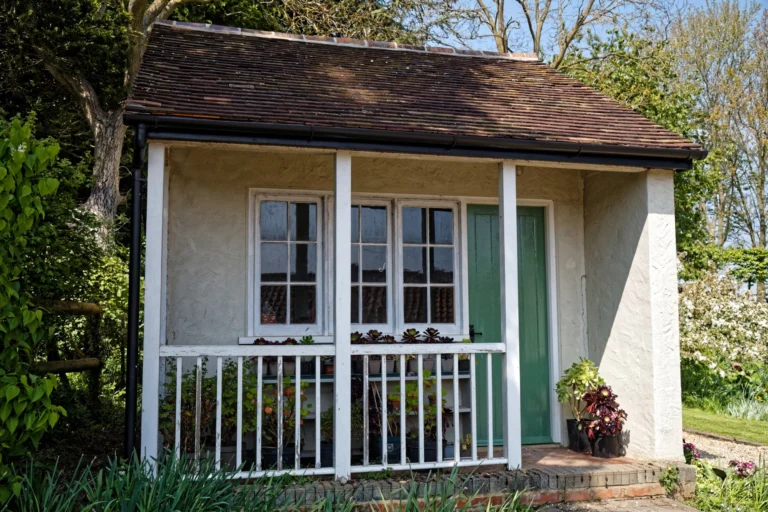
A potting shed is a small garden building set up for gardening work: a waist-height bench for potting, storage for tools and soil, good natural light and easy access to water. For most yards, an 8×8 to 8×12 shed with a full-length window wall and a potting bench of about 36 inches high covers everything you need. The details that make it pleasant to use are light, water and a floor that can get dirty.
Quick Facts
- Common sizes: 6×8, 8×10 and 8×12 feet
- Potting bench height: about 34 to 38 inches, close to kitchen counter height
- Bench depth: about 24 inches is comfortable for pots and trays
- Light: one long wall of windows or polycarbonate panels
- Floor: gravel, pavers or a sealed wood floor that tolerates soil and water
- Permits: many towns exempt small sheds, but rules vary; check first
Potting Shed vs Greenhouse vs Storage Shed
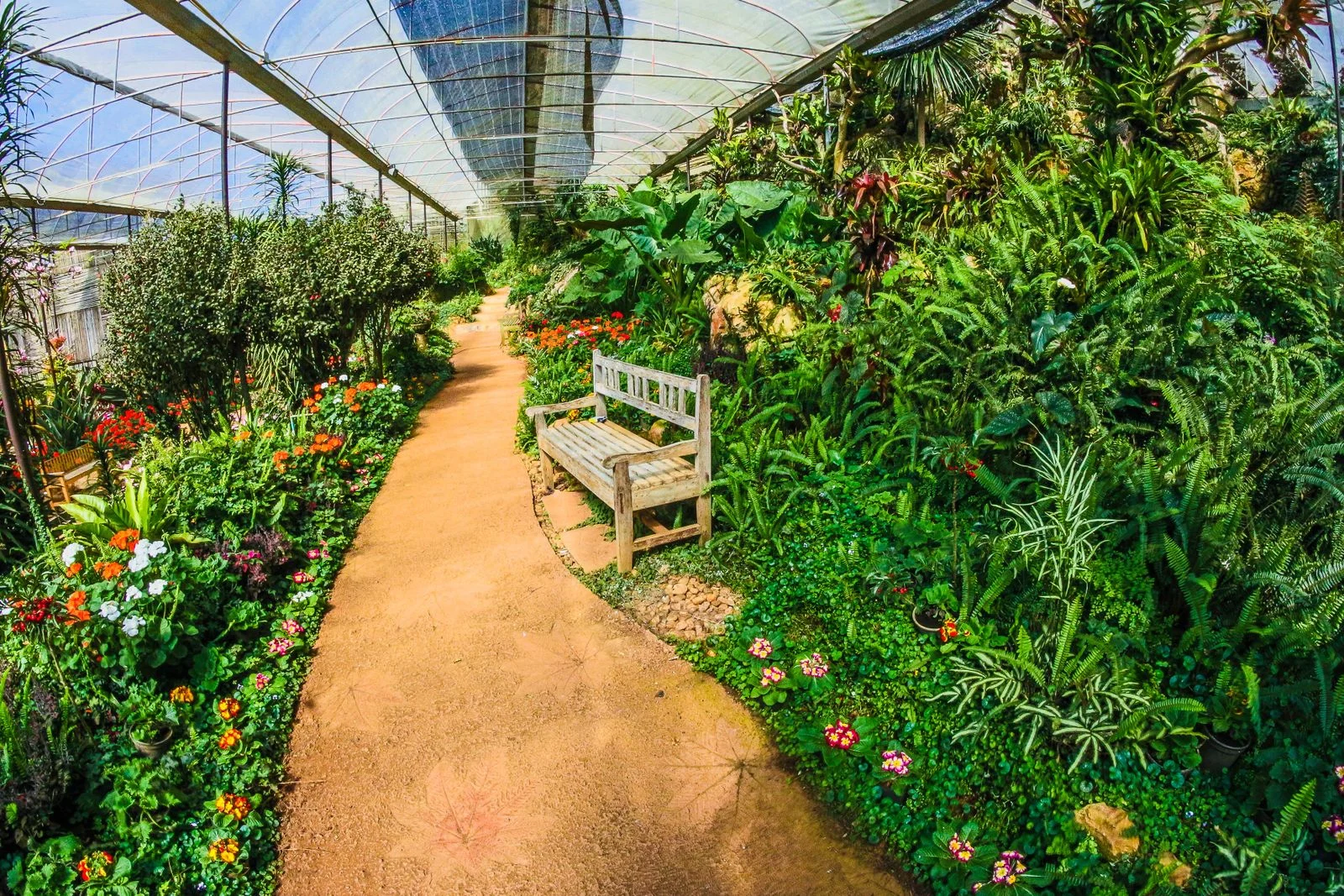
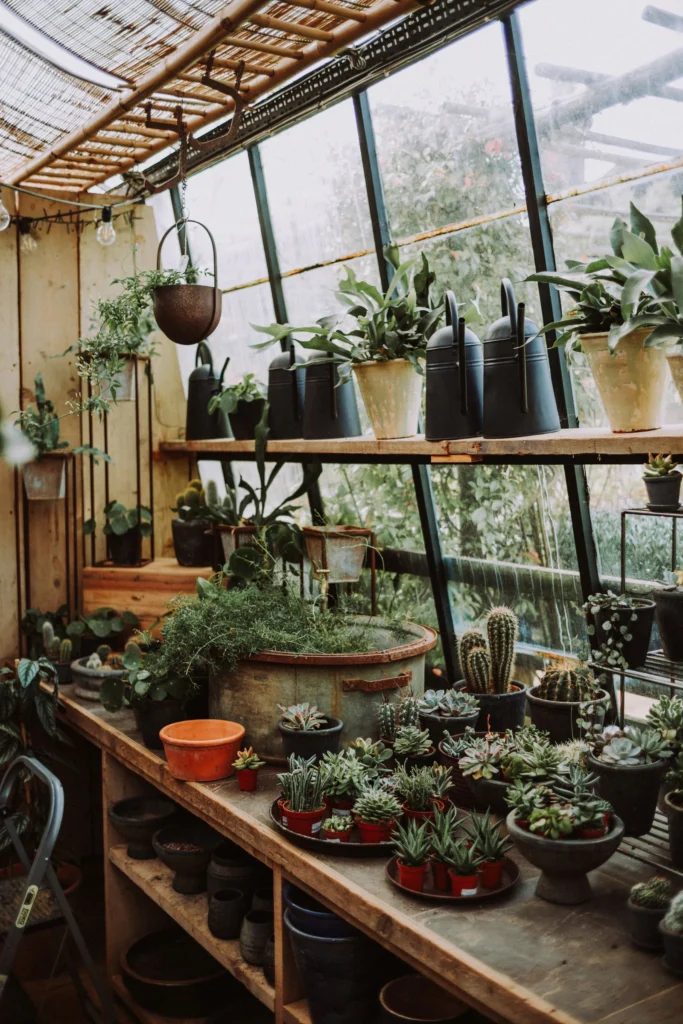
A storage shed is mostly closed and holds tools and equipment. A greenhouse is mostly glass or clear panels and is built for growing plants year-round. A potting shed sits in between: solid walls for storage and shade, plus enough windows to start seedlings and work in good light. Many gardeners add a small lean-to greenhouse on the sunny side to get the best of both.
Choosing the Right Size
| Size | Fits | Good for |
|---|---|---|
| 6×8 ft | A short bench, wall hooks, a few bags of soil | Small yards and balcony gardeners |
| 8×10 ft | A full-length bench, shelving and a few long-handled tools | Most home gardeners |
| 8×12 ft | Bench, shelving, mower or wheelbarrow storage | Gardeners who also need general storage |
| 10×12 ft and up | Bench, storage and room for a seed-starting rack | Serious growers and multi-use sheds |
Measure the largest things that will live inside, such as a wheelbarrow, mower or rolling cart, before choosing a size. Leave room to turn around with a full tray in your hands.
Layout and Features
The potting bench
Put the bench under the windows so you work in daylight. A height of about 34 to 38 inches suits most adults; taller people may prefer the higher end. A lower shelf holds bags of soil and pots, and a lip or backsplash along the back edge stops soil from spilling behind. A galvanized or plastic tray set into the bench top makes mixing soil easy to clean.
Light and ventilation
Windows on the south or east side give the best morning light for seedlings in most of the US. Plan at least one window or vent that opens, plus a vent high on the opposite wall, so hot air can escape in summer. A small shed with no airflow can overheat quickly.
Water
Carrying watering cans across the yard gets old fast. Options include a nearby hose bib, a rain barrel fed by the shed’s gutter, or a utility sink connected to a hose. If you add plumbing, check local rules, since freezing pipes are a concern in cold climates.
Storage
- Wall-mounted rails and hooks for long-handled tools
- Open shelves for pots and trays, closed bins for fertilizer and seed packets
- Lidded containers for soil and mulch to keep out moisture and rodents
- A pegboard above the bench for hand tools
Floors and Foundations
Potting sheds get wet and dirty, so choose a floor that handles it. Gravel and pavers drain well and cost less. A wood floor on a raised frame stays drier and warmer but should be sealed. For any shed, a level, well-drained base matters most; our guide to shed foundations and footings covers the basics, and our shed with a porch guide covers gravel pads in more detail.
What a Potting Shed Typically Costs
| Route | Typical range | Notes |
|---|---|---|
| Convert an existing shed | A few hundred dollars | Add a bench, shelves and a window |
| Kit shed (8×8 to 8×12) | About $1,000 to $4,000 | Plus foundation, paint and fittings |
| DIY build from plans | Varies with lumber and windows | Windows are often the biggest cost |
| Built by a contractor | Often several thousand dollars and up | Custom windows, power or water add cost |
Prices are typical US planning ranges, not quotes, and change with lumber prices and region.
Permits and Placement
Many US towns do not require a building permit for small one-story accessory buildings below a size limit; under the International Residential Code that limit is 200 square feet, but local rules often differ and some places require permits for any shed. Setbacks from property lines, electrical work and plumbing usually still need approval. Check with your town and your HOA before you buy or build.
Place the shed where it gets good light, stays dry, and is close to the garden beds you use most. Avoid low spots where water collects.
Mistakes to Avoid
- A bench that is too low, which leads to back strain
- No ventilation, so the shed overheats in summer
- Storing soil and seed in open bags that attract moisture and pests
- Building on a low, wet spot
- Forgetting water access until after the shed is finished
Frequently Asked Questions
What size should a potting shed be?
For most home gardeners, 8×10 feet fits a full-length bench, shelving and long tools. Choose 8×12 or larger if the shed also stores a mower or wheelbarrow.
How high should a potting bench be?
About 34 to 38 inches works for most adults, similar to kitchen counter height. Stand at the bench with your elbows bent; your hands should rest comfortably on the work surface.
Do I need a permit for a potting shed?
It depends on your town. Many places exempt small sheds below a size limit, but some require permits for any building. Electrical work and plumbing usually need approval.
What is the best floor for a potting shed?
Gravel or pavers drain well and tolerate soil and water. A sealed wood floor on a raised frame is warmer and drier but needs more care.
Can I turn a regular shed into a potting shed?
Yes. Add a window or two, a potting bench under the light, shelves and a vent. It is often the cheapest way to get a potting shed.