Matte Black Kitchen Hardware: Pulls, Knobs and Finishes That Work
Swapping cabinet hardware is the cheapest real change you can make to a kitchen. It is also easy to order wrong: the wrong pull length looks off, and the wrong screw spacing does not fit your doors at all. This guide covers sizing rules, what the finish is honestly like to live with, and the one measurement to take before spending anything.
Quick Facts
- Most common hole spacing: 3-3/4 inches (96 mm) center to center
- Pull length rule: about one-third the width of the drawer front
- Typical knob price: $2 to $6 each
- Typical pull price: $4 to $12 each in standard lengths
- Typical full-kitchen swap: $100 to $350 in hardware
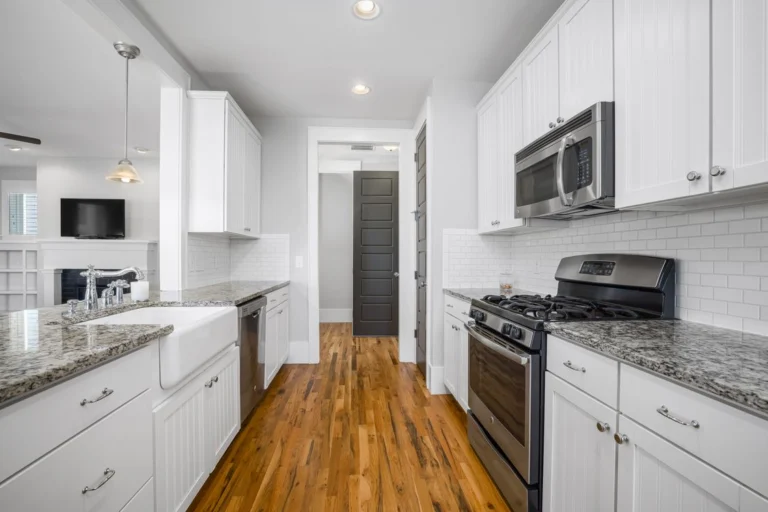
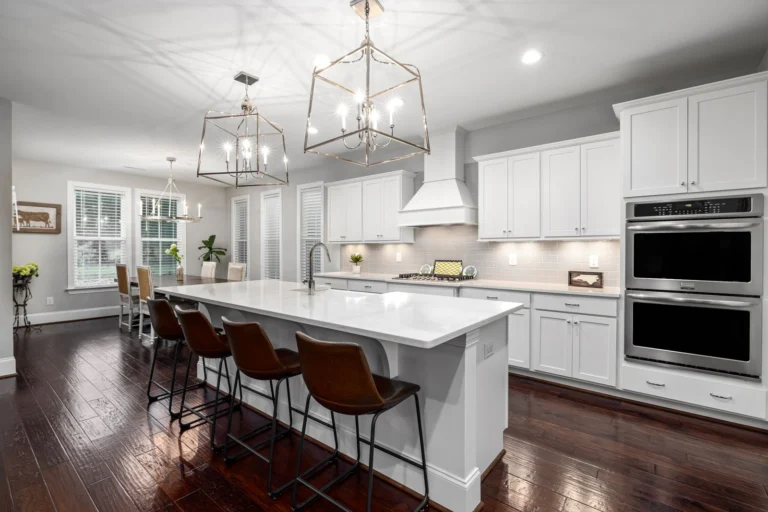
- Best pairings: White, warm wood, navy and green cabinets
Pulls, knobs, or both?
The standard arrangement is knobs on doors and pulls on drawers. Knobs are cheaper and need one screw hole. Drawers are where pulls earn their money: you can hook several fingers and haul a heavy pan drawer open one-handed, which a knob does not allow.
All pulls and no knobs looks more modern and suits slab and Shaker doors. All knobs is the budget route, and the only no-new-holes option if your drawers were drilled for knobs. Mixing is fine; what looks wrong is mixing shapes randomly, like a round knob on one drawer and a square one on the next. Pick one knob style and one pull style and repeat them everywhere.
Edge (finger) pulls are the third option: they mount on the top edge of the drawer front for the cleanest look, but they need clearance behind the front and feel less solid on wide, heavy drawers.
Sizing rules: pull length against drawer width
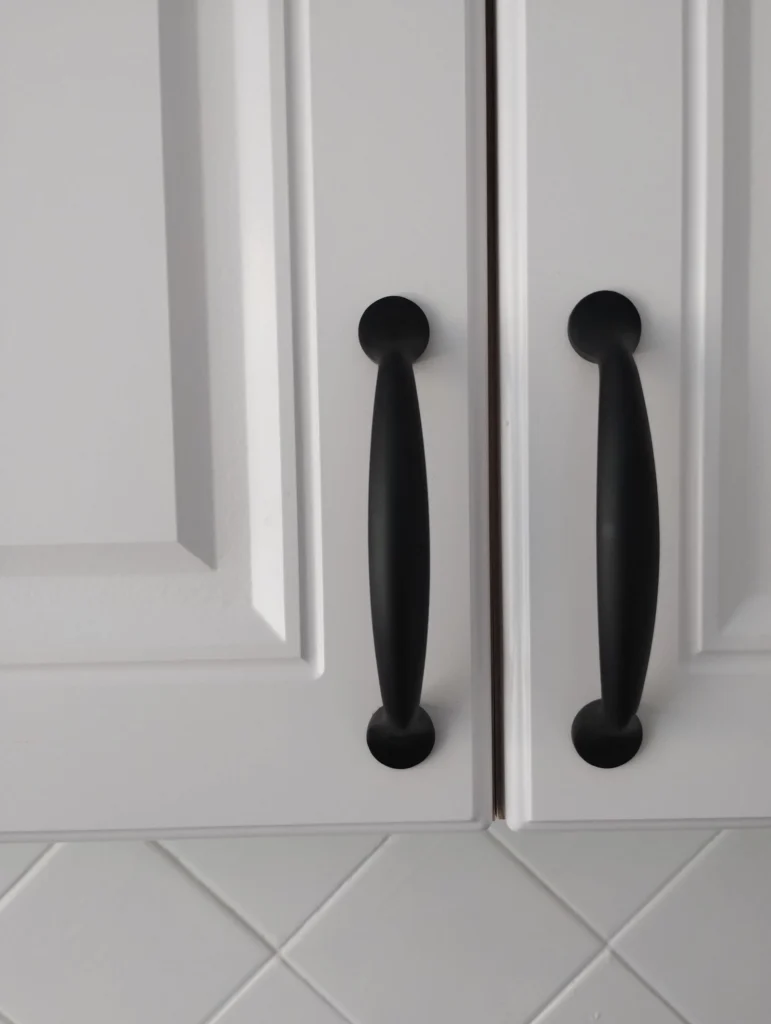
Hardware sizes are named by center-to-center spacing, the distance between the two screw holes, not the full length of the pull. The full piece is usually 2 to 3 inches longer than its spacing, so keep that straight when ordering.
The working rule: the pull should be roughly one-third the width of the drawer front:
| Drawer front width | Suggested pull (center to center) | Or use |
|---|---|---|
| Up to 12 in | 3-3/4 in (96 mm) | One knob |
| 13–24 in | 5-1/16 in (128 mm) | Two knobs |
| 25–30 in | 7-9/16 to 8-13/16 in (192–224 mm) | One long pull |
| 31–36 in | 10-1/16 in (256 mm) | One long pull, centered |
| Over 36 in | Two pulls, each about 5-1/16 in | Space them evenly |
Common spacings in listings: 3-3/4, 5-1/16, 6-5/16, 8-13/16 and 12-5/8 inches (96, 128, 160, 224 and 320 mm). The trend is toward longer pulls, and on wide drawers longer genuinely looks and works better. The mistake to avoid is the opposite end: a short 3-3/4-inch pull centered on a 30-inch drawer looks lost and makes the drawer awkward to open.
One more fit check: pull projection — how far the bar stands off the cabinet, usually 1 to 1-3/8 inches. Deep projections catch hips and clothing in a tight galley; shallower pulls belong in narrow walkways.
Measure your existing holes before ordering
This is the step people skip, and the whole job, if your cabinets are already drilled. Unscrew one existing pull and measure between the centers of the two holes. That number is your spacing, and new pulls with the same spacing drop straight in. The most common existing spacing in US kitchens is 3-3/4 inches (96 mm); 3 inches and 5-1/16 inches also turn up on older and newer cabinets.
If your new favorite pull has a different spacing, your options are: drill a new hole and cover the old one with a backplate under the pull (sold for exactly this), use a pull with an oversized footprint, or stay with knobs, which need only one hole each. On painted cabinets a filled hole is hard to hide, so backplates are the honest fix, and they suit Shaker doors. While a pull is off, check screw length too: standard screws fit 3/4-inch fronts; drawer fronts with a separate inner panel need the longer breakaway screws most packs include.
The finish, honestly: fingerprints, dust and chips
Matte black hardware is usually zinc alloy, aluminum or steel with a powder-coated or painted finish. Powder coating is tougher and the one to look for; plain painted finishes on the cheapest multipacks can wear at the edges within a year or two, showing bright metal underneath.
Day to day, here is the trade nobody mentions in the product photos. Matte black hides grease smears better than polished chrome, but it shows pale dust, flour and hard-water spots more than any mid-tone finish; you will see a light film on the pulls nearest the countertop. It wipes off in seconds with a damp microfiber cloth; make it a weekly habit along with the counters, and avoid abrasive pads and harsh degreasers, which dull and strip the coating.
Where it genuinely struggles is next to the range and sink: steam and detergents age the coating faster there. If one or two pieces will take that abuse, buy spares from the same batch now — finishes vary between production runs, and a spare bought in three years may not match.
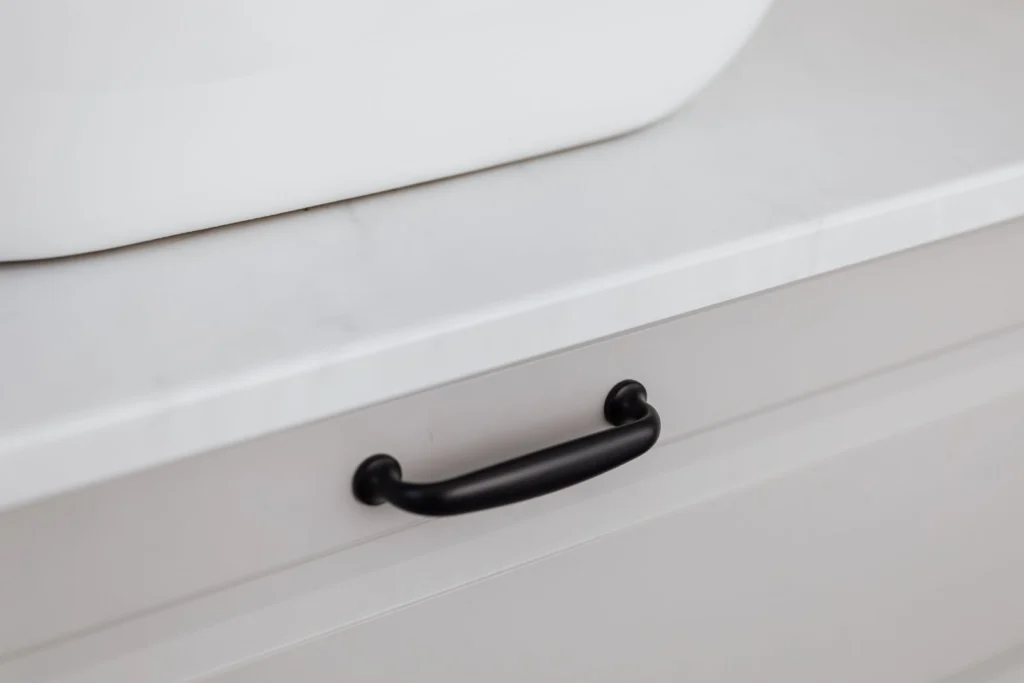
Cabinet colors: where it works, where it fails
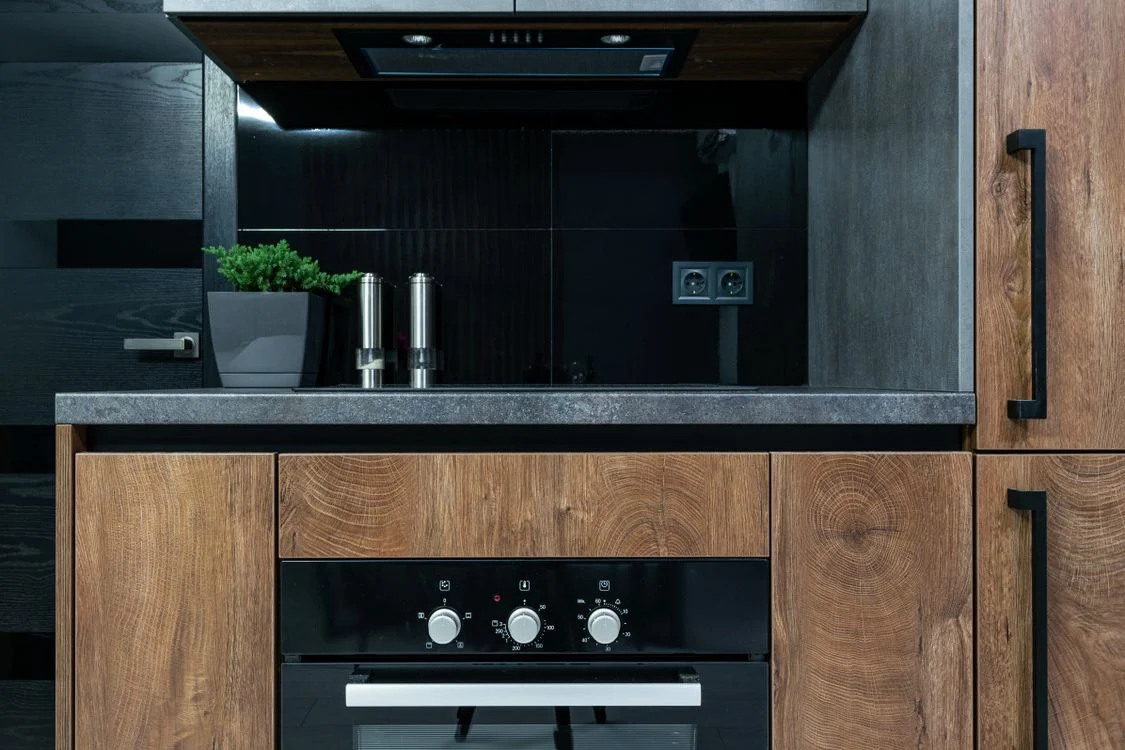
Matte black works by contrast. On white and off-white cabinets it is the obvious, reliable pairing — the same reason it suits the warm off-whites covered in our antique white guide. It is equally good on warm mid-tone wood (oak, walnut), where it reads modern without fighting the grain, and on navy, deep green and medium gray cabinets. With gray schemes it also ties in neatly with a mid-gray tile grout such as oyster gray.
Where it fails:
- Black or near-black cabinets. The hardware disappears entirely. If that flat, handle-less look is the goal, fine; if not, you wanted contrast and won’t get it.
- Very dark espresso and dark cherry. Almost the same problem — too little contrast, and the undertones clash.
- High-gloss cabinets. Every fingerprint on the doors shows, and the flat hardware looks chalky next to it — two different kitchens.
- Gray-stained wood with orange undertones. Black hardware makes the orange read stronger. Test one pull on one door before ordering thirty.
Mixing matte black with other metals
You do not need to change the faucet, appliances and lights to match. Stainless appliances with black hardware is a standard, working combination — appliances read as background, not a finish to match. The rule that keeps mixed metals looking planned: every finish should appear at least twice in the room. Black pulls plus a black faucet, or black pulls plus black pendant lights, looks deliberate; one lonely brass faucet in a sea of black looks like a leftover.
Mixing black with brushed brass or warm bronze also works well: black is neutral and lets the brass carry the warmth. Keep sheens consistent — matte black with brushed or satin metals, not mirror-polished ones. And buy all your black pieces from one maker if you can: “matte black” is not standardized, one brand’s finish is slightly glossier or browner than another’s, and side by side on the same drawer run the difference shows.
What it costs
Typical US prices, as a guide rather than a quote. Basic knobs run $2 to $6 each and standard pulls $4 to $12 each at home centers and online, often less in multipacks of 10 or 20, and multipacks from one batch are the smart buy for finish consistency. Longer pulls (10 inches and up) run $10 to $25, and appliance pulls $15 to $45. A typical kitchen has 20 to 30 pieces of hardware, putting a full swap at roughly $100 to $350; solid brass hardware with a black finish sits well above that, $15 to $40 a piece. Two more budget lines: a couple of spares, and a $10 to $20 drilling jig if your cabinets are undrilled — the jig is what makes 25 placements identical.
Time-wise, swapping like-for-like spacing is an afternoon with a screwdriver; drilling new holes across a kitchen is a careful half-day.
FAQ
Does matte black hardware show fingerprints?
Less than polished chrome, more than brushed nickel. Its real weakness is pale dust and flour, which show clearly on the dark surface. A weekly wipe with a damp microfiber cloth keeps it right; skip abrasive cleaners, which damage the coating.
What size pull should I buy for a 30-inch drawer?
Follow the one-third rule: pulls around 8-13/16 to 10-1/16 inches center to center (224–256 mm). A single long pull centered on the drawer looks right and opens evenly. The common 3-3/4-inch pull will look and feel too small.
Can I mix matte black hardware with stainless steel appliances?
Yes — a common combination, and it works because appliances read as background. Repeat the black somewhere else, such as the faucet or light fixtures, so the scheme looks planned rather than accidental.
Will the black finish chip or wear off?
On powder-coated hardware, not under normal use. On the cheapest painted multipack pulls, the edges of high-use drawers can wear through to bright metal within a year or two. Buy powder-coated for drawers you open daily, and keep same-batch spares.
My old pulls are an odd size. How do I avoid visible holes?
Measure the existing hole spacing center to center first; it is probably a standard 3-3/4 or 5-1/16 inches. If your new pull differs, use a backplate under it to cover the old hole, or switch to knobs, which need only the one hole you already have.
The short version
Measure the hole spacing on one existing pull before opening a single listing. Size new pulls at about a third of the drawer width, buy powder-coated pieces from one batch with spares, and pair the black with cabinets that give it contrast. Do those four things and a weekend swap will make the whole kitchen look deliberately finished.