Library Nook Ideas: Turn a Corner, Closet or Landing Into a Reading Spot
A library nook is not a small library. It is 20 or so square feet claimed properly: one chair you can sit in for an hour, shelves within arm’s reach, and light that lands on the page, not in your eyes. Whether a nook gets used daily or ends up collecting laundry comes down to three decisions — the spot, the chair, the light. The books are the easy part.
Quick Facts
- Space needed: 4 × 5 ft minimum; 5 × 6 ft feels generous
- Chair fit: seat height 16–19 in, seat depth 20–24 in
- Shelf depth: 10–12 in for hardcovers; 8 in for paperbacks
- Book weight: roughly 20 lb per linear foot of filled shelving
- Reading light: warm bulb (2700–3000K), about 800 lumens, over your shoulder
- Typical cost: $250–$600 for a weekend build; $1,500–$4,000+ for built-ins
Where a Nook Fits (and Where It Doesn’t)
Good nook spots sit outside the traffic flow, and nobody needs them for anything else — a spot you must dismantle for guests won’t survive a month.
Under the stairs is the strongest candidate. The slope that ruins it for standing storage works for you: reading happens sitting low. You need about 42 inches of headroom at the chair back; shelves step down with the slope.
A spare closet works as a shelving bay, not a room. A reach-in closet (24 inches deep, 4–6 feet wide) is too shallow for a chair inside, but right for full-height shelves or a low bench, chair outside. Take the doors off.
A landing is often dead space with a window — half the job done. Keep 30 inches of path clear and the chair away from any railing a child could climb from.
A bay window gives you light and a boundary. Run a low bookcase along one side and angle the chair toward the room, not the glass — sun in your face is not reading light.
A plain room corner works anywhere — outside the TV’s sightline in the living room, or a bedroom corner planned like the furniture zones in 10×10 bedroom queen bed layouts, chair and shelves as one block, walkway clear.
| Spot | Minimum size | Best setup |
|---|---|---|
| Under the stairs | 4 × 5 ft under the slope | Shelves stepped down slope |
| Reach-in closet | 2 ft deep × 4–6 ft wide | Full-height shelves or a bench |
| Landing | 4 × 4 ft, path kept clear | Chair plus one bookcase |
| Bay window | About 4 ft, one side | Low shelves, chair angled in |
| Room corner | 4 × 5 ft | Bookcase and chair as one block |
The Chair Decides Everything
People shop for nook chairs by looks, from across the room. Then they read in it twice. A reading chair has a job — holding you, a book and your elbows in one position for 45 minutes, and you can test it in the store. Sit in it for ten full minutes with a book. If your back aches, your feet dangle or you keep shifting, walk away however good it looks.
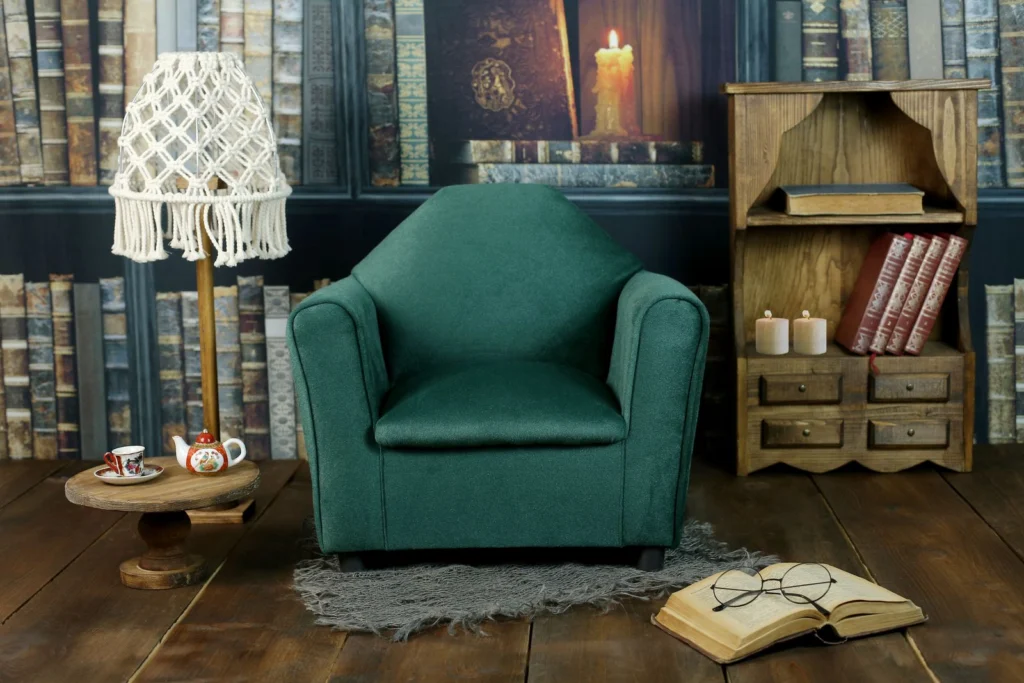
The numbers: seat height 16–19 inches, feet flat; seat depth 20–24 inches (deeper swallows shorter readers; buy right); arms roughly 24–26 inches off the floor, so forearms rest level with the book. Wingbacks block drafts and sightlines; a swivel glider suits a nook you also talk from. Skip accent chairs under 20 inches wide. They are occasional chairs, and reading is not occasional.
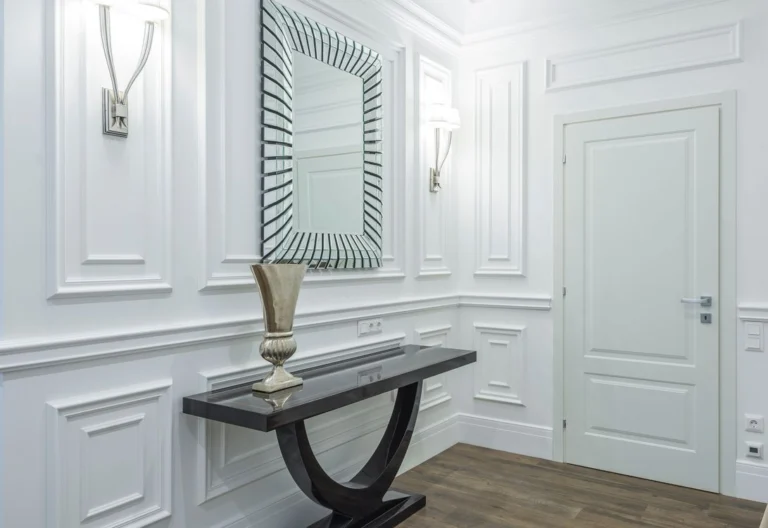
Add the supporting cast: an ottoman 14–16 inches high turns a good chair into an hour-long chair; a side table 18–24 inches across holds the drink, glasses and current book. Where the nook backs onto a wall, a slim demilune console table does the same job in half the floor space and gives the to-be-read stack a home.
Shelving That Won’t Sag
Books are heavier than they look. A filled linear foot of shelf runs about 20 pounds, more for art books, so a 6-foot bookcase quietly holds 400 pounds. Material and span decide whether it still looks straight in five years.
Solid wood and 3/4-inch plywood shelves sag visibly under books at spans past about 36 inches; particleboard and ready-to-assemble shelves give up around 24–30 inches. Keep spans under 3 feet, use thicker stock, add a center support, or fit track shelving that carries the load into the studs. Anchor any freestanding case over 30 inches tall to the wall — a loaded case is top-heavy, and toddlers climb.
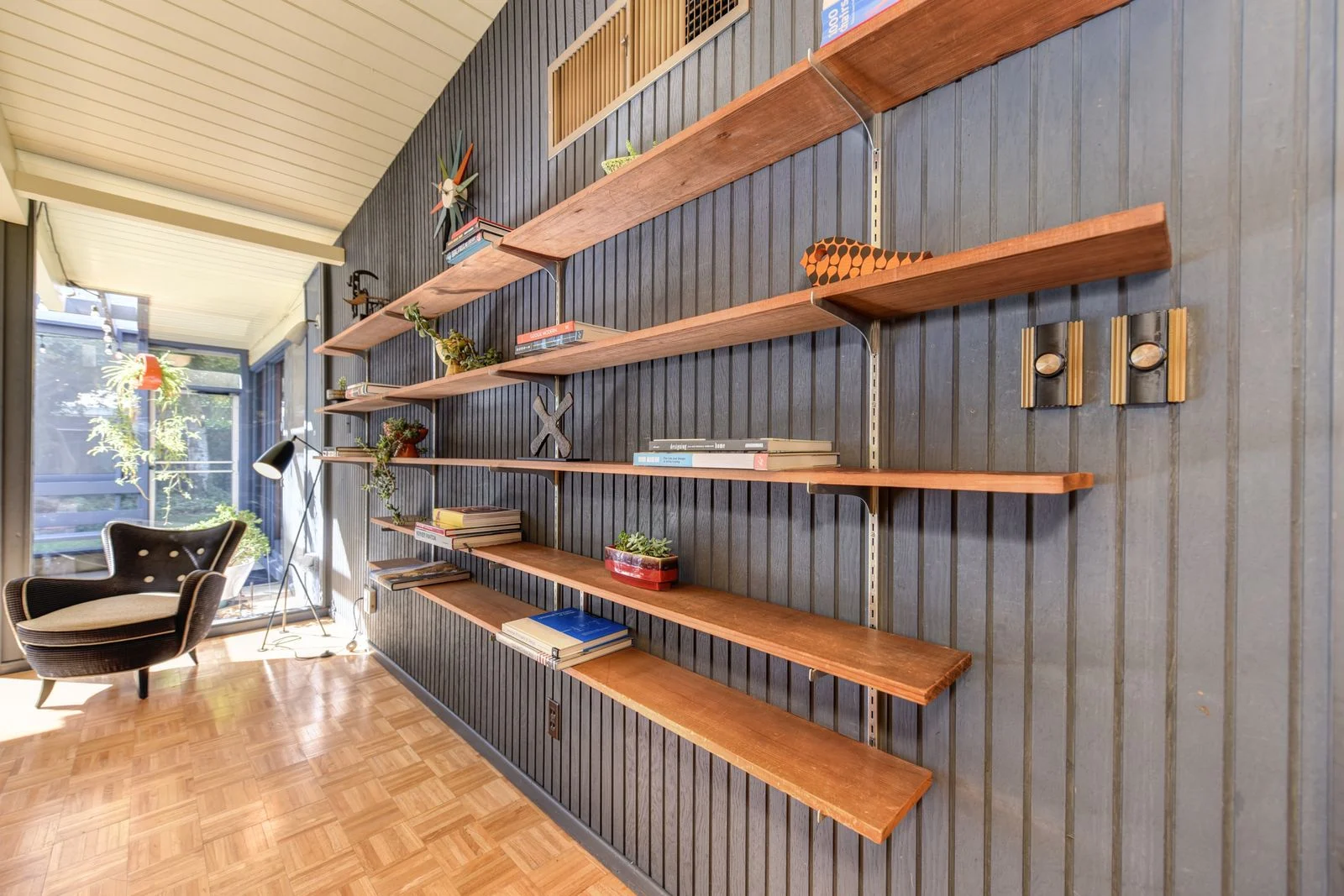
Six to ten linear feet of shelving covers a serious rotation. Work to 10–12 inches of depth, 10–12 inches between shelves for novels and hardcovers, 13–15 for oversize books, top shelf at or below 72 inches. Leave a fifth of the space empty — shelved to bursting, a nook reads as storage, not a library.
Lighting: The Part Most People Get Wrong
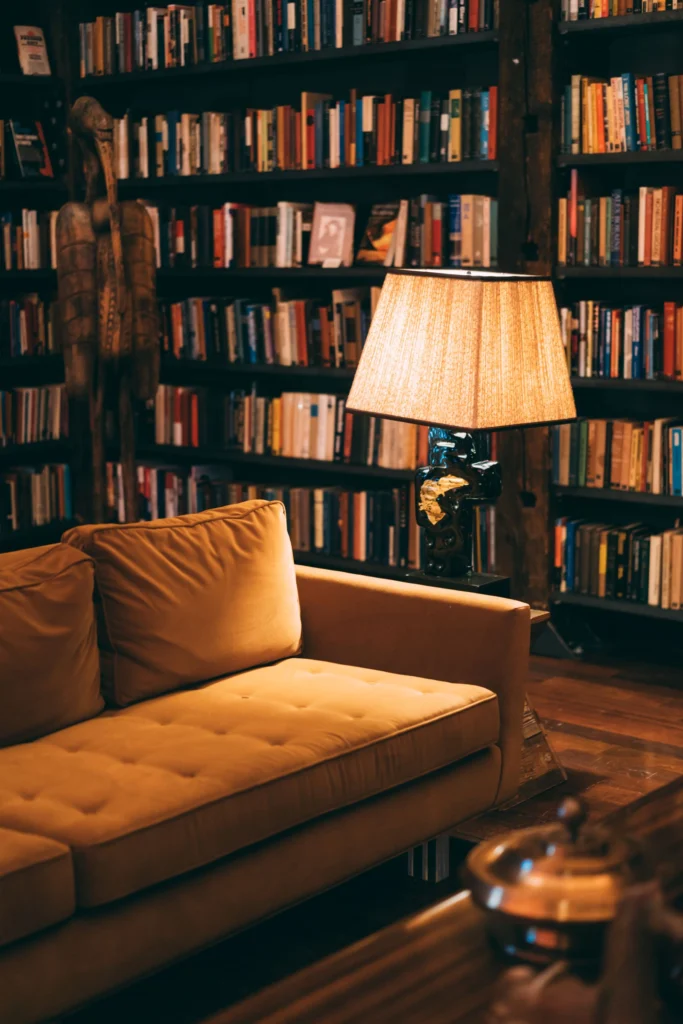
More nooks die from bad light than from bad chairs. The usual setup, one ceiling light mid-room, puts your own head and shoulders between bulb and page, so you read in your own shadow. Overhead light is for finding the nook, not reading in it.
Reading light should come over your shoulder, from behind and beside the chair, landing on the page at an angle. In practice: a floor lamp behind the chair’s shoulder, or a wall sconce in the same spot, shade bottom at seated eye level, 40–48 inches off the floor. Choose a warm bulb, 2700–3000K, around 800 lumens (a 60-watt-equivalent LED). Daylight from behind or beside you is ideal; sun facing you tires eyes faster than a dim lamp, and a sheer curtain fixes a window-facing chair.
Plan the outlet before the furniture. A cord stretched across a walkway is how nooks get unplugged and abandoned, and adding an outlet later runs $150–$350 for an electrician. Treat the corner’s power the way you would when planning a functional home office — lamp, phone charger, maybe a speaker, all fed from one point, no trailing leads.
What It Costs: Weekend Build vs. Built-Ins
A nook is a cheap upgrade because the square footage is tiny. The split is between a weekend furniture build and paying a carpenter to build it in.
Weekend build. Ready-made bookcase $120–$400, lamp $60–$180, side table $50–$150. With a chair you already own, the total is typically $250–$600; buying the chair too ($250–$800) brings it to $700–$1,500.
Built-in route. Carpenter-built shelving typically runs $1,500–$4,000 for one wall. Add a storage bench or window seat at $800–$2,500 and sconces with electrical work at $300–$700, and most projects land between $2,500 and $6,500. Built-ins buy you stepped under-stair shelves and shelving that ends at the ceiling instead of 14 inches short of it. Build the cheap version first and live with it through one winter.
The Kids’ Version
A child’s nook follows the same rules at two-thirds scale, with three changes. Seating goes to the floor: a washable bean bag or thick floor cushion in a 3 × 4 ft corner is enough, because children read in positions no chair survives. Shelving drops to their height — forward-facing bins or low shelves at 24–36 inches, covers out, since pre-readers choose by the cover and ignore spine-out shelves at adult height. And everything gets anchored, with washable covers — the nook will host juice.
Keep a brighter lamp within the adult’s reach for reading aloud, and rotate a dozen books through the nook instead of shelving fifty: twelve visible choices get read, fifty become furniture.
Mistakes That Kill a Nook
- Buying the chair without sitting in it first. The ten-minute test exists because returning an assembled armchair is miserable.
- Shelves too deep. A 16-inch bookcase wastes room and hides a second row of forgotten books.
- Ceiling light only. If the page sits in your shadow, the nook is a decoration.
- Nowhere for a drink. Without a side table, mugs get balanced on book stacks.
- Building in a traffic path. A nook between sofa and kitchen gets walked through and finally reabsorbed.
- Filling every shelf on day one. With no room to grow, new books exile old ones to piles, and piles unravel nooks.
Frequently Asked Questions
How much space do you need for a library nook?
A 4 × 5 ft footprint is the working minimum — armchair, side table, shelves along one side. At 5 × 6 ft you can add an ottoman and a full-height bookcase. With less, shrink the shelving, not the chair — wall shelves over a good chair beat a cramped chair between bookcases.
What is the best chair for a reading nook?
The one you can sit in for 45 minutes without shifting: seat height 16–19 inches with feet flat, seat depth 20–24 inches, arms at book height. Wingbacks, reclined reading chairs and swivel gliders work; narrow accent chairs do not. Test it in person, book in hand, for ten minutes before buying.
How deep should bookshelves be in a nook?
Ten to twelve inches: hardcovers are 6 to 9 inches deep, and the extra stops books sitting flush at the edge. Paperbacks manage in 8 inches. Allow 10–12 inches between shelves for novels, 13–15 for oversize volumes; keep spans under 36 inches so loaded shelves stay straight.
Can you turn a closet into a library nook?
Yes. A reach-in closet (24 inches deep, 4–6 feet wide) makes a fine shelving bay: remove the doors, fit shelves or a low bench inside, and put the chair just outside the opening. A closet 5 feet wide or more can hold a bench with shelves above. Add light deliberately — closets rarely have an outlet or fixture.
How much does it cost to build a library nook?
Typically $250–$600 if you already own a suitable chair, and $700–$1,500 buying everything new. Carpenter-built shelves, a storage bench or under-stair work bring the total to $2,500–$6,500, electrician included. The chair dominates the cheap version, the carpentry the expensive one.