How to Get the Look of a Nancy Meyers Kitchen (Without a Movie Budget)
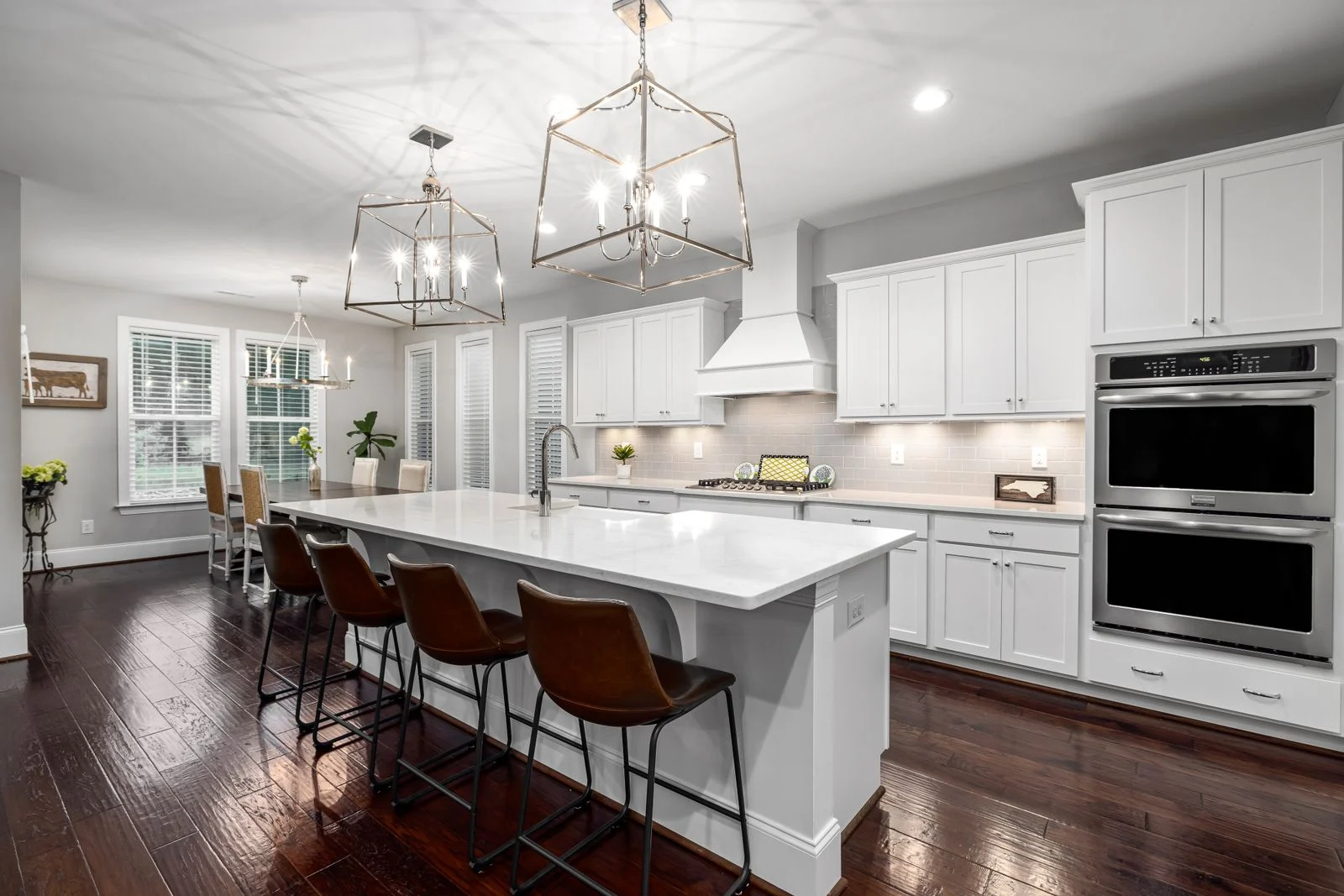
A “Nancy Meyers kitchen” is the warm, classic, slightly lived-in kitchen style made famous by the writer and director’s films, including Something’s Gotta Give, The Holiday, It’s Complicated and The Intern. The look is easy to recognize: creamy white cabinets, a big island that feels like furniture, stone counters, glass-front uppers full of white dishes, and soft light. The good news is that almost every part of it can be copied in an ordinary kitchen, often without replacing a single cabinet box.
Quick Facts
- Core palette: warm white or cream cabinets, natural stone or stone-look counters, mid-tone wood
- Signature piece: a large island that looks like a freestanding table or cabinet
- Hardware: classic knobs and cup pulls in polished nickel, brushed nickel or unlacquered brass
- Lighting: a pair of lantern or schoolhouse pendants, plus sconces or a small counter lamp
- Feel: relaxed and collected, not staged or ultra-modern
- Budget route: paint, hardware, lighting and styling can deliver most of the look
What Makes the Look Work
These kitchens look expensive, but the reason is not one costly item. It is the combination of a restrained palette, traditional details and a lot of warmth. Nothing is high gloss, nothing is stark, and the room looks like someone actually cooks in it.
The key elements:
- Warm white cabinets in a simple Shaker, inset or beaded-inset style. The white leans cream rather than blue.
- A big, furniture-like island, often painted a slightly different color or finished in wood, with room for several stools.
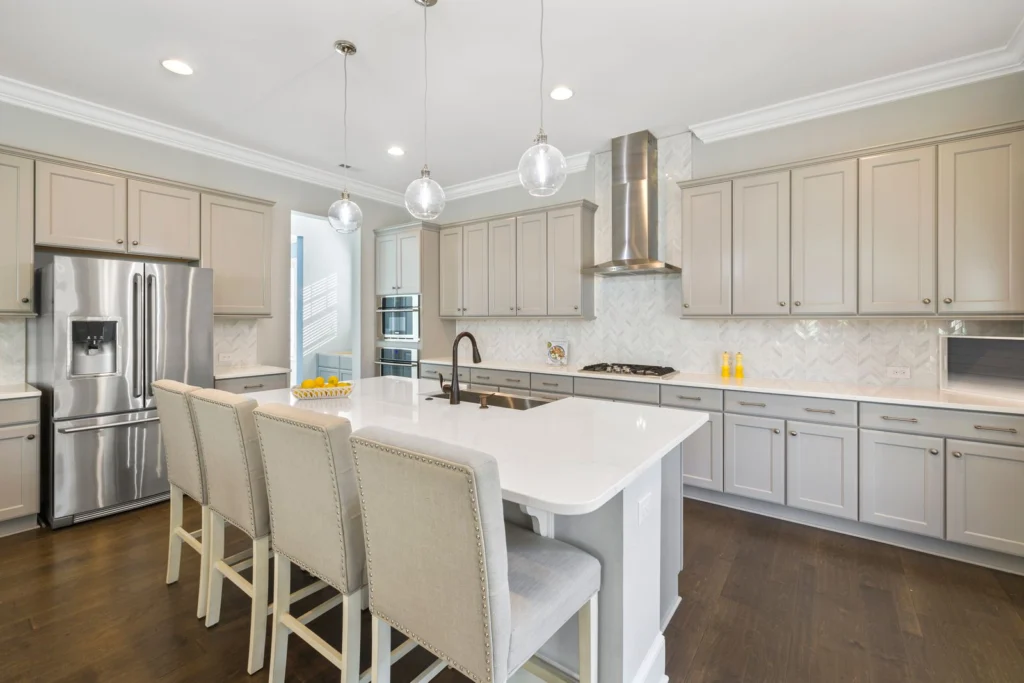
- Stone counters such as honed marble or soapstone, or a quartz with soft gray veining.
- Glass-front upper cabinets or open shelves showing stacks of white plates and bowls.
- A classic backsplash in white subway tile, small marble tile or a simple stone slab.
- Traditional hardware with a soft sheen rather than a matte or ultra-modern finish.
- Layered lighting that feels like evening at a dinner party, not an office.

Step 1: Get the White Right
The fastest way to miss this look is a cold, bright white. Choose a warm white or soft cream with a little yellow or beige in it, and test it next to your counters and floor before painting. Our antique white paint guide explains how warm whites shift in north- and south-facing light.
For painted cabinets, use a paint made for cabinets and trim in satin or semi-gloss. Proper cleaning, sanding and primer matter more than the brand: cabinet paint over greasy, unprimed doors is what peels.
Step 2: Make the Island the Star
In most of these kitchens the island is the piece people remember. It reads as furniture because of a few details:
- Turned or square legs at the corners, or a base that sits on feet instead of a plinth
- A different finish from the perimeter cabinets, such as painted sage, soft gray or stained wood
- A generous overhang of about 12 inches on the seating side, so stools tuck under comfortably
- Enough clearance around it: aim for roughly 42 inches of walkway on working sides, and 36 inches at a minimum
If a new island is not in the budget, you can still change the feel of an existing one by painting it a contrasting color, adding corbels under the overhang, or swapping a modern base panel for simple trim.
Step 3: Choose Classic Hardware and Fixtures
Hardware is jewelry here. Classic choices include round knobs on doors, cup pulls on drawers, and bridge or gooseneck faucets. Polished nickel and unlacquered brass are the most common in this style because they glow rather than flash.
Keep metals consistent within each group: one finish on cabinet hardware, and the faucet either matching or clearly complementing it. If you want to compare finishes, our guide to matte black kitchen hardware covers sizing rules that apply to any finish.
Step 4: Layer the Lighting
A single flush ceiling light makes any kitchen look like a rental. These kitchens use three layers:
- Pendants over the island: two lanterns or schoolhouse shades are typical, hung so the bottom sits roughly 30 to 36 inches above the counter.
- Task light under the upper cabinets so the counters are bright for cooking.
- Soft light from sconces, a small lamp on the counter or a light inside glass-front cabinets for evenings.
Use warm bulbs, around 2700K to 3000K, so the whites stay creamy at night.
Step 5: Style It Like Someone Lives There
The props do as much work as the cabinets. Think of what you see in the films: a bowl of lemons, a big vase of hydrangeas or branches, linen dish towels, wooden cutting boards leaned against the backsplash, a stack of well-used cookbooks and a rug runner in front of the sink.
The rule is “collected, not cluttered.” Choose a few large, useful objects instead of many small ones, and keep at least half the counter clear for actual cooking.
Budget Swaps That Get You Most of the Look
| Upgrade | Typical cost range | Impact |
|---|---|---|
| Paint existing cabinets a warm white (DIY) | About $150 to $400 in supplies | Very high |
| New classic knobs and cup pulls | About $100 to $350 for a typical kitchen | High |
| Pair of island pendants | About $150 to $600 | High |
| Rug runner, linen towels, flowers and boards | About $100 to $300 | Medium |
| Professional cabinet painting | Often several thousand dollars | Very high |
| New stone or quartz counters | Varies widely by size and material | High |
Prices are typical US ranges for planning, not quotes. Start with paint, hardware and lighting; those three changes do most of the visual work.
Mistakes That Break the Look
- Cool, blue-white paint that makes the room feel clinical
- High-gloss slab doors and handleless cabinets, which belong to a modern kitchen
- Too many gadgets on the counter, which turns “lived-in” into “cluttered”
- Harsh daylight bulbs that flatten the warm palette in the evening
- Matching everything exactly; a little contrast between the island and perimeter keeps it from looking like a showroom
Frequently Asked Questions
What color are Nancy Meyers kitchen cabinets?
Mostly warm white or cream, sometimes paired with an island in a contrasting soft color or natural wood. The common thread is warmth: nothing stark or blue-white.
Do you need a big kitchen for this style?
No. A small kitchen can borrow the warm white palette, classic hardware, good lighting and a few styled pieces. If an island will not fit, a narrow kitchen cart or a small farmhouse table can play the same role.
What countertops go with the look?
Honed marble and soapstone are classic choices. Quartz with soft gray veining is a lower-maintenance alternative that gives a similar effect. Butcher block on the island also fits.
Which hardware finish is most typical?
Polished nickel and unlacquered brass are the most common in this style. Brushed nickel works if you prefer a softer, lower-maintenance finish.
Is this kitchen style going out of date?
It is a traditional style rather than a trend, so it tends to age well. Warm whites, classic hardware and natural materials have been popular for decades and are likely to stay that way.