Gray and White Kitchen Cabinets: Combinations That Work (and Ones That Don’t)
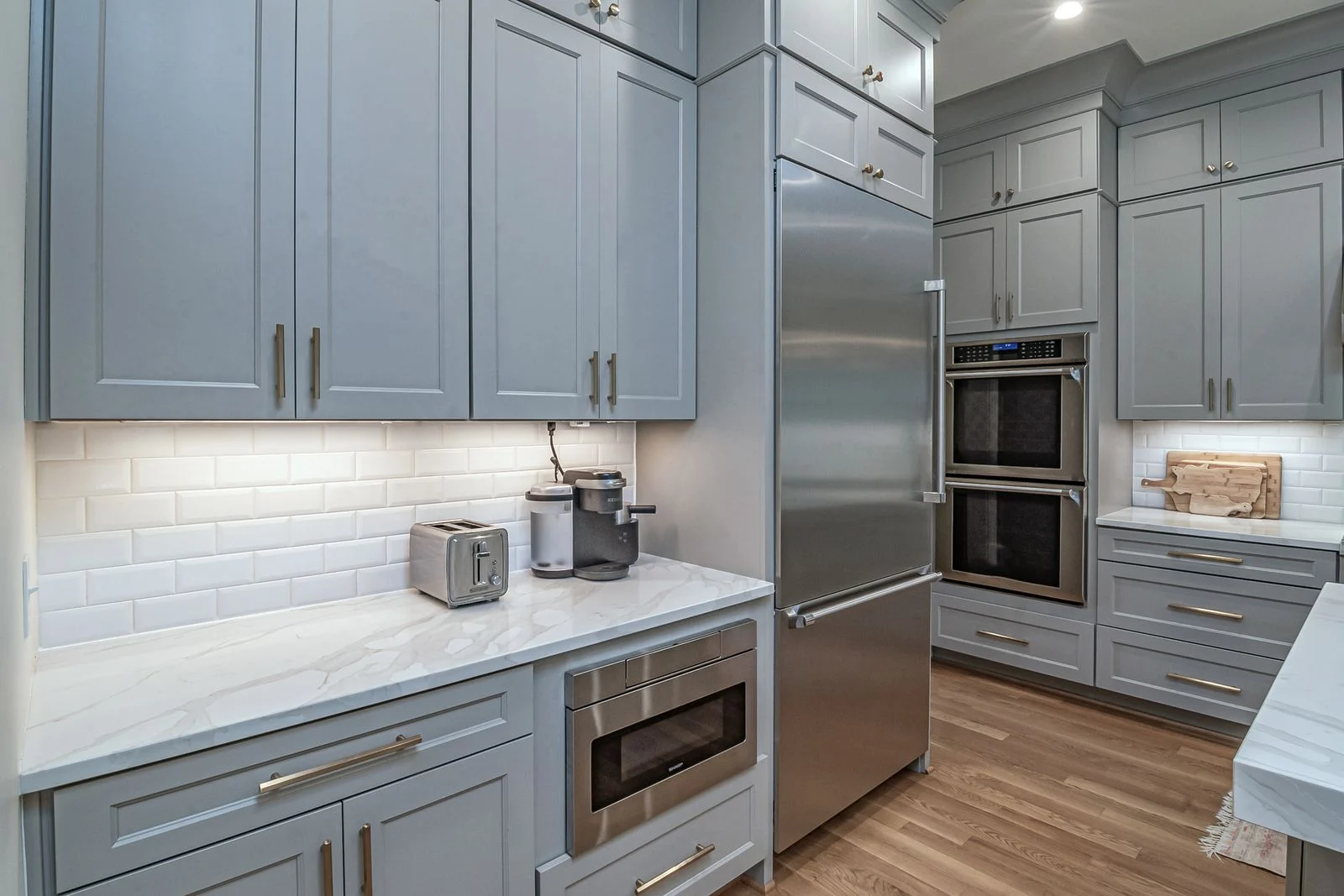
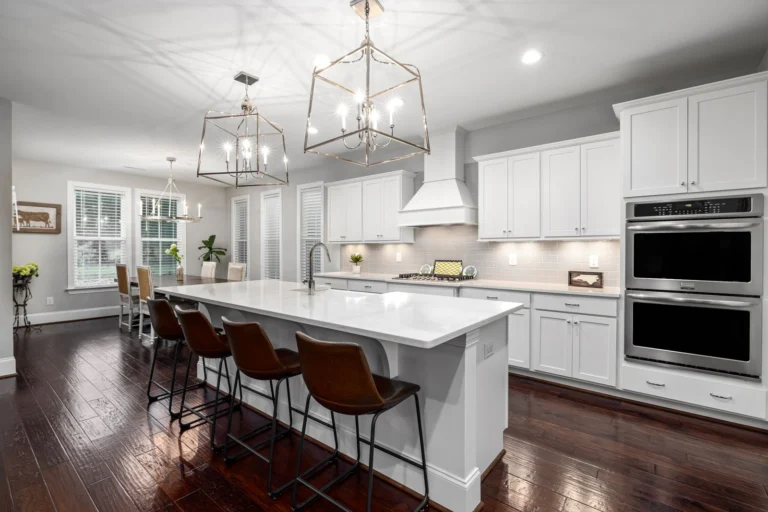
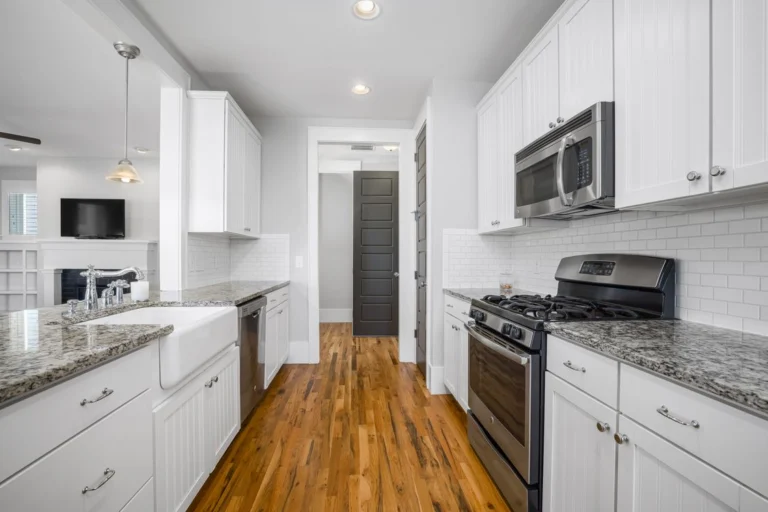
Gray and white kitchen cabinets give you contrast without the heaviness of a dark kitchen. The most reliable approach is simple: keep the lighter color high and the darker color low. White uppers with gray lowers, or a white kitchen with a gray island, will suit most homes and most budgets. The details that decide whether it looks expensive or flat are the gray’s undertone, the counter, and the hardware.
Quick Facts
- Safest layout: white upper cabinets, gray lower cabinets
- Most flexible layout: all-white perimeter with a gray island
- Key decision: warm gray (beige undertone) or cool gray (blue or green undertone)
- Counters that work: white quartz, marble-look surfaces, butcher block
- Hardware: brushed brass warms it, matte black sharpens it, nickel stays neutral
- Typical DIY repaint: often a few hundred dollars in supplies for an average kitchen
Why Light Up, Dark Down Works
Heavier colors read as more grounded when they sit near the floor. Gray base cabinets also hide scuffs from feet, pets and vacuum cleaners better than white ones. White upper cabinets keep the eye level of the room bright, which matters most in small kitchens and kitchens with only one window.
Flipping the scheme, gray uppers over white lowers, tends to make the ceiling feel lower and the room top-heavy. It can work in a tall, bright kitchen, but it is the exception rather than the rule.
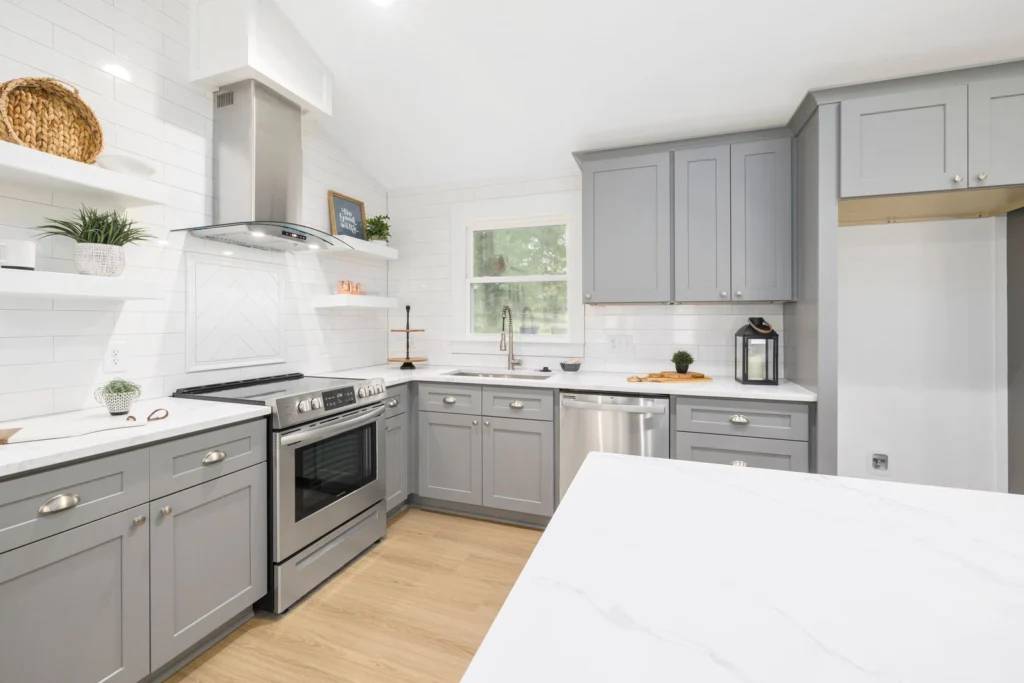
Six Layouts That Work
| Layout | Effect | Best for |
|---|---|---|
| White uppers, gray lowers | Bright and grounded | Most kitchens, especially small ones |
| All white with a gray island | One clear focal point | Open-plan kitchens and great rooms |
| Gray perimeter, white island | Moodier, more dramatic | Large kitchens with good daylight |
| White cabinets, gray backsplash tile | Subtle contrast at eye level | Renters and small budgets |
| Light gray everywhere, white walls and counters | Soft, almost tonal | Modern and Scandinavian styles |
| White cabinets, gray pantry or tall bank | Breaks up a long wall | Kitchens with a wall of tall units |
Choosing the Right Gray
Every gray leans one way or another, and that lean decides what it goes with.
- Warm grays carry beige or brown. They suit wood floors, cream walls, brass hardware and butcher block. They feel cozy and traditional.
- Cool grays carry blue or green. They suit white marble, chrome and stainless steel. They feel crisp and modern.
Hold paint samples against the things you are not changing: the floor, the countertop and any tile. Look at them in morning light and again at night under your actual bulbs. A gray that looks neutral on a small chip can turn noticeably blue or green across a run of cabinets. If you are keeping a warm white elsewhere, our antique white paint guide shows how warm and cool tones clash.
Also pay attention to depth. A gray that is too pale ends up looking like dirty white beside white uppers. Go at least two or three steps darker on the paint card than the white so the contrast looks intentional.
Countertops, Backsplash and Floors
Countertops. White quartz or a marble-look surface keeps the scheme fresh. Gray-veined patterns tie the two cabinet colors together. Butcher block on the island adds warmth and works especially well with warm grays.
Backsplash. White subway tile is the classic choice. A gray grout line repeats the lower cabinet color and hides kitchen grime better than bright white grout; see our guide to oyster gray grout with subway tile.
Floors. Mid-tone wood stops gray and white from feeling cold. Very gray floors under gray cabinets can make the bottom half of the room blend into one block, so leave some contrast between them.
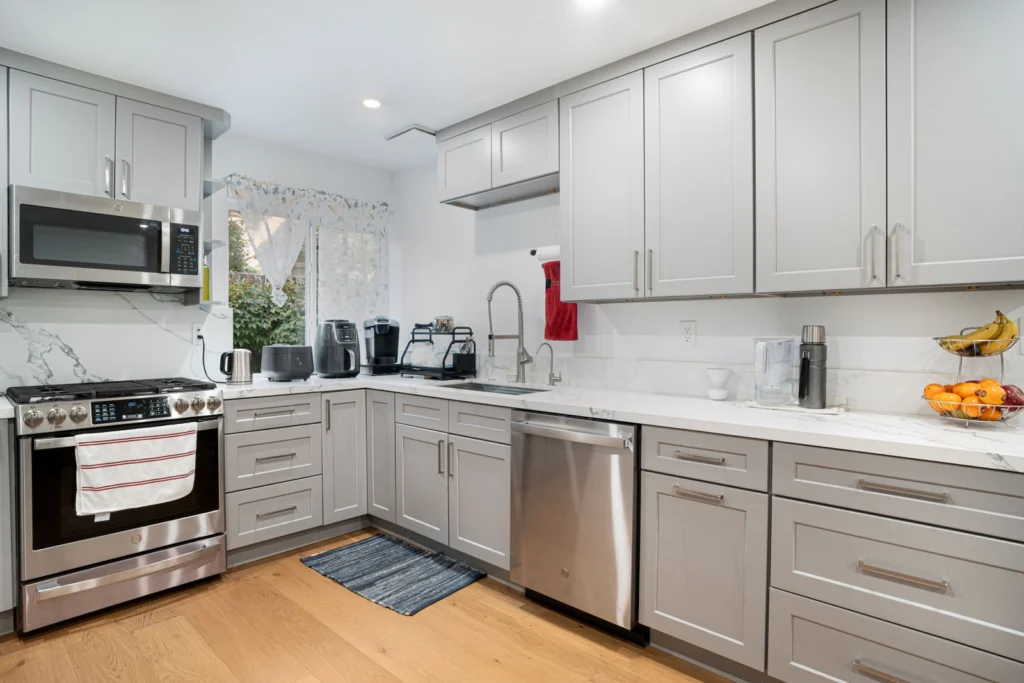
Hardware: The Fastest Way to Set the Mood
- Brushed brass or champagne bronze warms cool grays and makes the kitchen feel softer and more traditional.
- Matte black sharpens the contrast and suits modern and farmhouse styles. Our matte black kitchen hardware guide covers pull sizes by drawer width.
- Polished or brushed nickel stays quiet and lets the cabinet colors lead.
Use one finish for all cabinet hardware. Mixing two finishes on the same run of cabinets usually looks like a mistake rather than a choice.
Painting Cabinets You Already Have
Repainting is the budget route to this look. The order that holds up best:
- Remove doors, drawers and hardware, and label everything.
- Degrease thoroughly. Kitchen grime is the main reason cabinet paint fails.
- Scuff-sand glossy surfaces and wipe off all dust.
- Prime with a bonding primer made for cabinets.
- Apply two thin coats of cabinet and trim paint in satin or semi-gloss, letting each coat cure fully.
- Rehang doors only when the paint is hard, not just dry to the touch.
Plan for a long weekend for a small kitchen and longer for a large one, plus curing time before heavy use.
Mistakes That Make It Look Flat
- Mixing warm and cool grays in the same room
- A gray so pale it reads as dingy white next to the uppers
- Adding a third strong cabinet color, which makes the room busy
- Gray cabinets on a gray floor with gray counters, with nothing to separate them
- Skipping degreasing and primer before painting
Frequently Asked Questions
Should upper or lower cabinets be darker?
Usually the lowers. Darker base cabinets keep the kitchen bright at eye level and hide scuffs near the floor.
Is a gray kitchen going out of style?
Flat, cool all-gray kitchens are less popular than they were a few years ago. Two-tone gray and white kitchens with warm grays, wood and brass are still a safe, long-lasting choice.
What color countertop goes with gray and white cabinets?
White quartz or a marble-look surface is the most versatile. Butcher block works well on an island and pairs best with warm grays.
What color walls go with gray and white cabinets?
A soft warm white or a very light gray in the same undertone family as the cabinets. Avoid bright, blue-white paint next to warm gray cabinets.
Can I paint just the lower cabinets gray?
Yes. Painting only the lowers, or only the island, is one of the easiest ways to get a two-tone look without repainting the whole kitchen.