
Diffuser vs Humidifier: What’s the Difference and Which Do You Need?
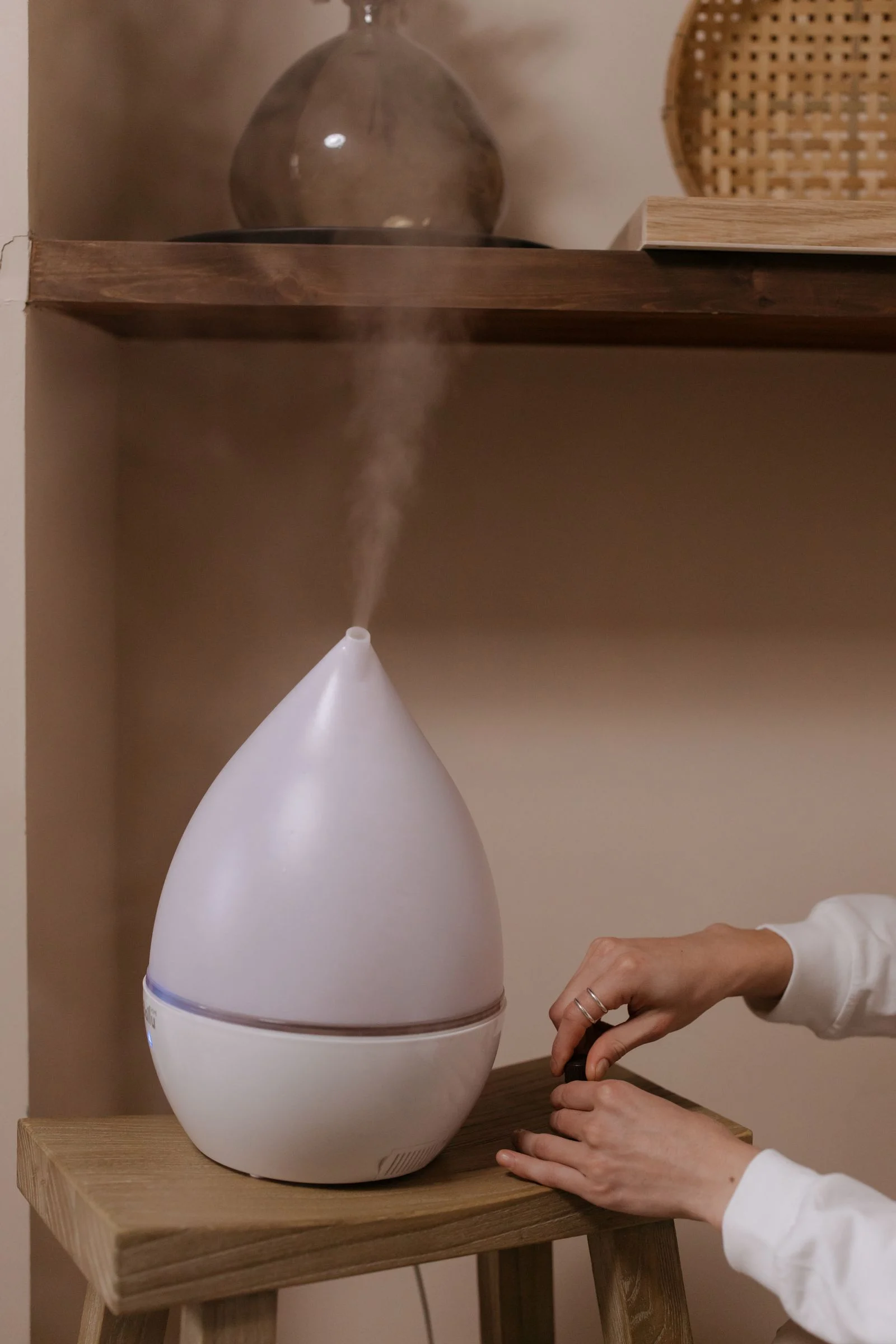
A humidifier adds moisture to the air to fix dryness; a diffuser spreads a small amount of essential oil mist to scent a room. They can look almost identical, but they do different jobs. If your skin, lips or sinuses feel dry in winter, you want a humidifier. If you want a room to smell nice, you want a diffuser. A diffuser holds too little water to raise the humidity of a room in any meaningful way.
Quick Facts
- Humidifier job: raise indoor humidity
- Diffuser job: disperse fragrance from essential oils
- Typical tank size: humidifiers often 1 to 2 gallons or more; diffusers often a few hundred milliliters
- Comfortable indoor humidity: about 30 to 50 percent
- Essential oils: only in devices designed for them
- Cleaning: rinse and dry tanks often; follow the maker’s schedule
How Each One Works
Humidifiers release water vapor into the room. Common types include:
- Ultrasonic (cool mist): a vibrating plate turns water into a fine mist. Quiet and energy efficient.
- Evaporative (cool mist): a fan blows air through a wet wick or filter. It naturally limits over-humidifying.
- Warm mist: heats water to produce steam. Can feel cozy, but the hot water is a burn risk around children and pets.
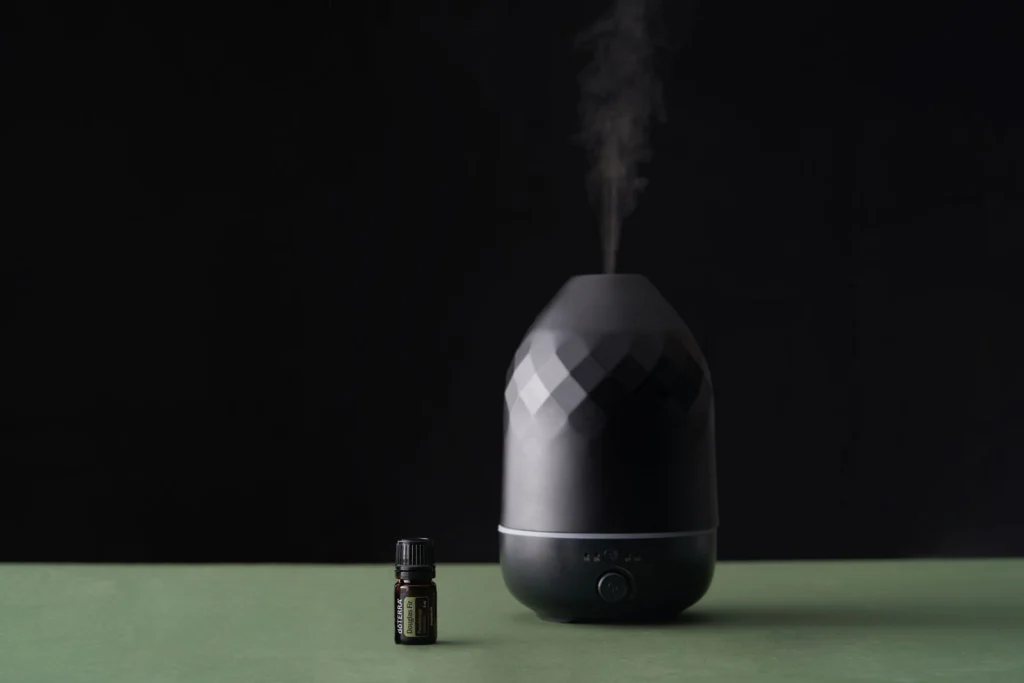
Diffusers are built to scent the air. Most home diffusers are small ultrasonic units that mix a few drops of oil with a little water. Others, called nebulizing diffusers, use pressurized air and no water at all.
Side-by-Side Comparison
| Feature | Humidifier | Diffuser |
|---|---|---|
| Main purpose | Add moisture to dry air | Add fragrance |
| Typical tank size | Large | Small |
| Room coverage | Sized by square footage | Scent only, no real humidity change |
| Essential oils | Only if the model says so | Designed for them |
| Best for | Dry winter air, dry skin, static | Scent, mood, masking odors |
| Running time | Often many hours per tank | Often a few hours per fill |
How to Tell If Your Home Needs a Humidifier
Signs of dry air include static shocks, dry or itchy skin, chapped lips, a scratchy throat in the morning, and wood floors or furniture developing small gaps. The best check is a simple hygrometer, an inexpensive humidity meter.
The EPA recommends keeping indoor humidity below 60 percent, ideally between 30 and 50 percent. Too much humidity encourages mold and dust mites, so more is not better. Many people only need a humidifier during heating season.
Can You Put Essential Oils in a Humidifier?
Only if the manufacturer says the model is designed for it. Essential oils can damage the plastic tanks and parts of many humidifiers and may void the warranty. Some humidifiers include a separate aroma pad or tray for this purpose; use that instead of adding oil to the water.
Safety Notes
- Pets: many essential oils, including tea tree, wintergreen, cinnamon, clove and peppermint, can be harmful to pets, especially cats and birds. Run diffusers in rooms pets can leave, for short periods, or skip oils if you have a cat. If a pet shows signs of illness, call your vet or the ASPCA Animal Poison Control Center.
- Children: keep warm-mist humidifiers out of reach to avoid burns.
- Water quality: ultrasonic humidifiers can release minerals from tap water as a fine white dust. The EPA’s humidifier guidance suggests using water with low mineral content, such as distilled water.
- Placement: set either device on a water-resistant surface a few feet off the floor, away from walls, curtains and electronics.
Cleaning and Care
Standing water grows bacteria and mold. Empty and rinse tanks regularly, let them dry, and clean them on the schedule in the manual. Replace filters or wicks on evaporative models as recommended. Diffusers need similar care: wipe out oil residue often, because it builds up on the plate and reduces mist.
Which One Should You Buy?
- Buy a humidifier if your hygrometer reads below about 30 percent in winter or you have dry-air symptoms.
- Buy a diffuser if your goal is scent and the air already feels comfortable.
- Buy both if you want both, but run them separately and keep oils out of the humidifier unless it is designed for them.
Frequently Asked Questions
Is a diffuser the same as a humidifier?
No. A diffuser spreads essential oil mist for fragrance, while a humidifier adds enough moisture to change a room’s humidity. A diffuser’s small tank cannot humidify a room in a meaningful way.
Can a diffuser help with dry air?
Not much. It releases very little water. If dry air is the problem, use a humidifier and check the level with a hygrometer.
Which is better for a bedroom?
For dry winter air, a quiet cool-mist humidifier. For scent, a diffuser on a timer. Keep humidity in the 30 to 50 percent range.
Can I use tap water in a humidifier?
Many humidifiers allow it, but tap water can leave white mineral dust from ultrasonic models. Distilled or low-mineral water reduces this.
Are essential oil diffusers safe for cats?
Many essential oils can harm cats. Ask your vet before using one, and never use oils where a cat cannot leave the room.